The automation landscape in the UAE stands at a pivotal transformation point. While traditional Robotic Process Automation (RPA) served as the foundation for digital efficiency, a new paradigm has emerged that promises to revolutionize how enterprises operate. Agentic AI represents the next evolutionary leap: one that 85% of UAE enterprises are actively pursuing as they recognize the limitations of rule-based automation.
This shift transcends simple technology adoption. It represents a fundamental reimagining of autonomous business operations, where intelligent systems make decisions, adapt to changing conditions, and optimize processes without constant human intervention.
Understanding the Fundamental Divide: RPA vs. Agentic AI
Traditional RPA operates within rigid parameters, executing predefined workflows with mechanical precision. These systems excel at repetitive, rule-based tasks but falter when confronted with exceptions, variations, or complex decision-making scenarios.
Agentic AI fundamentally transforms this paradigm by introducing:
- Autonomous adaptability that navigates changing conditions without reprogramming
- Complex decision-making capabilities that evaluate multiple factors and weigh alternatives
- Self-learning mechanisms that improve performance through experience
- Contextual understanding that interprets nuanced situations beyond binary logic
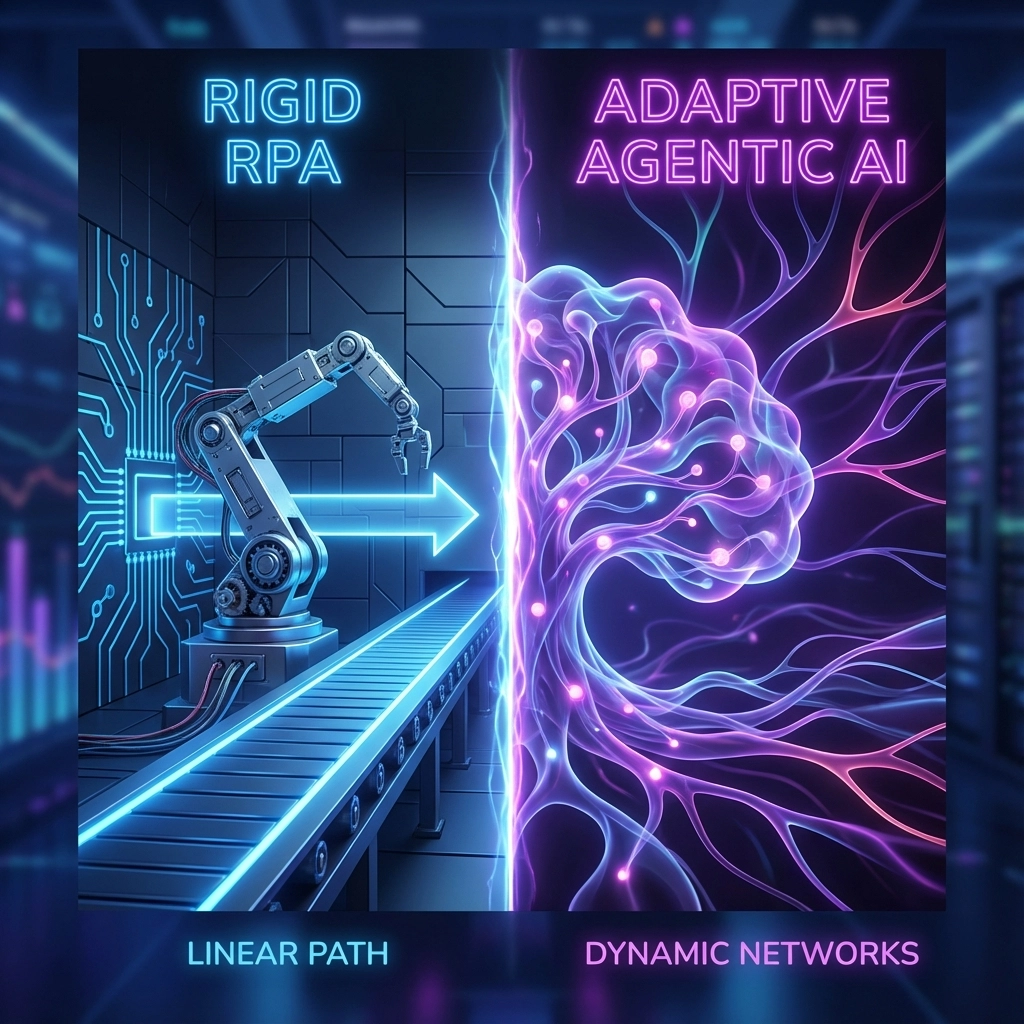
The distinction becomes clear when examining real-world applications. Where RPA might require dozens of pre-configured rules to handle invoice processing variations, agentic AI systems understand context, recognize patterns, and make intelligent decisions about edge cases automatically.
Why UAE Enterprises Lead the Global Transformation
Strategic National Vision
The UAE's National Strategy for Artificial Intelligence 2031 has created an ecosystem that demands advanced automation capabilities. This ambitious framework positions the nation as a global AI leader, creating both opportunity and competitive necessity for enterprises to modernize their automation infrastructure.
Infrastructure Investment and Support
Major technology investments underscore the region's commitment to this transformation. UiPath's expansion of Automation Cloud™ integrated with Microsoft Azure in the UAE demonstrates the infrastructure support enabling this transition. Organizations now access robust data security, agility, and low latency while maintaining compliance with local data residency requirements.
Economic Diversification Pressures
As the UAE continues its economic diversification beyond oil dependency, enterprises face mounting pressure to optimize operations, reduce costs, and enhance competitive positioning. Agentic AI provides the operational intelligence necessary to achieve these objectives at scale.
Real-World Impact Across UAE Industries
Healthcare Transformation
Healthcare organizations across the region have deployed agentic AI systems that coordinate across Electronic Health Record (EHR) systems and payer portals autonomously. These implementations deliver measurable results:
- 35-day reduction in average accounts receivable days
- 7% decrease in primary claim denials
- 30% improvement in administrative processing times

Financial Services Innovation
UAE banks and financial institutions leverage agentic AI for intelligent onboarding and fraud detection, transforming verification cycles from several days to minutes. Advanced expense management systems now read company policy documents, audit expenses autonomously, and flag violations while learning from each decision to reduce false alarms.
Supply Chain Optimization
Regional logistics operators integrate predictive AI agents that analyze market conditions, weather patterns, and demand fluctuations to optimize delivery routes and reduce per-shipment costs. These systems continuously adapt to changing conditions, delivering efficiency improvements that traditional RPA cannot achieve.
Software Quality Assurance
Enterprise software teams deploy autonomous testing agents that monitor system change logs, identify impacted business scenarios, prioritize risk-based testing, and adapt testing strategies based on results: all without manual oversight.
Your Step-by-Step Transition Framework
Phase 1: Assessment and Planning (Months 1-2)
Conduct Comprehensive Process Audit
- Inventory existing RPA implementations
- Identify bottlenecks and exception handling challenges
- Map decision-making complexity across workflows
- Assess data integration requirements
Define Success Metrics
- Establish baseline performance measurements
- Set specific ROI targets tied to business outcomes
- Create governance frameworks for regulated sectors
- Develop compliance checklists for banking, healthcare, and government sectors
Phase 2: Pilot Implementation (Months 3-8)
Select Strategic Use Cases
Focus on industry-specific problems rather than generic applications:
- Banking: Automated compliance monitoring and risk assessment
- Healthcare: Patient engagement and claims processing
- Logistics: Predictive supply chain optimization
- Manufacturing: Quality control and predictive maintenance
Establish Technical Foundation
- Integrate fragmented legacy systems
- Implement data governance protocols
- Create human override capabilities for sensitive decisions
- Deploy monitoring and auditing systems

Phase 3: Scale and Optimize (Months 9-18)
Expand Successful Pilots
- Roll out proven use cases across departments
- Integrate agentic systems with existing business applications
- Develop advanced workflow orchestration capabilities
- Implement continuous learning and optimization protocols
Advanced Integration
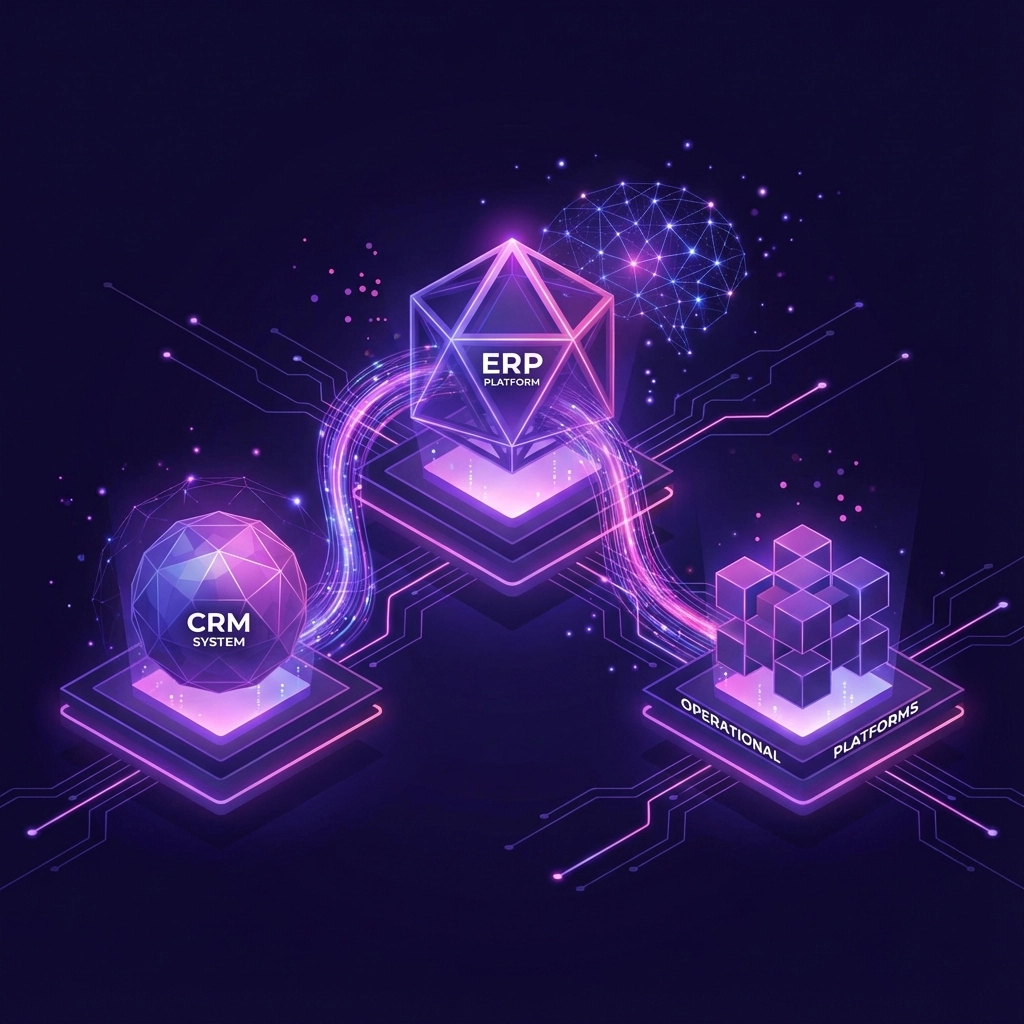
- Connect ERP, CRM, and operational systems
- Deploy cross-functional agentic workflows
- Implement predictive analytics capabilities
- Establish autonomous decision-making protocols
Implementation Best Practices for UAE Enterprises
Platform Selection Criteria
For regulated industries prevalent in the UAE: banking, healthcare, and government-linked enterprises: prioritize platforms that provide:
- Local data residency compliance with UAE regulations
- Legacy system integration capabilities for existing infrastructure
- Vendor transparency and auditability for regulatory compliance
- Exit flexibility to avoid vendor lock-in scenarios
Governance Framework Development
Establish comprehensive oversight mechanisms:
- Clear ownership protocols for agentic system decisions
- Embedded compliance rules within automated workflows
- Regular bias and accuracy audits to ensure fair outcomes
- Complete documentation standards for regulatory requirements
Change Management Strategy
Executive Alignment
Secure C-level sponsorship by demonstrating clear ROI projections and competitive advantages. Frame agentic AI adoption as strategic positioning rather than operational improvement.
Workforce Development
- Train existing RPA teams on agentic AI capabilities
- Develop new skill sets for system monitoring and optimization
- Create career advancement pathways for automation specialists
- Establish knowledge sharing protocols across departments

Measuring Success and ROI Realization
UAE enterprises implementing agentic AI typically observe value realization across three distinct phases:
Short-term Gains (6 months)
- Process efficiency improvements in isolated workflows
- Exception handling optimization reducing manual intervention
- Data accuracy enhancements through intelligent validation
- Initial cost savings from reduced manual processing
Medium-term Integration (18 months)
- Cross-functional workflow optimization delivering compound efficiency gains
- Revenue-linked improvements through enhanced customer experience
- Predictive capabilities enabling proactive business decisions
- Operational risk reduction through intelligent monitoring
Long-term Transformation (3+ years)
- Strategic competitive advantages through autonomous operations
- Innovation acceleration via AI-powered business insights
- Market responsiveness through adaptive system capabilities
- Scalable growth support without proportional resource increases
Overcoming Common Implementation Barriers
Data Integration Challenges
Challenge: Fragmented legacy systems prevent effective agentic AI deployment.
Solution: Implement data integration platforms that create unified data layers accessible to agentic systems without disrupting existing operations.
Regulatory Compliance Concerns
Challenge: Regulated industries require transparent, auditable decision-making processes.
Solution: Deploy explainable AI frameworks that document decision logic and maintain complete audit trails for regulatory review.
Skills Gap Management
Challenge: Limited expertise in agentic AI implementation and management.
Solution: Partner with specialized implementation providers while developing internal capabilities through structured training programs.
The Strategic Imperative: Acting Now
The transition from RPA to agentic AI represents more than technological advancement: it defines competitive positioning for the next decade. UAE enterprises that delay this transformation risk falling behind competitors who leverage autonomous decision-making capabilities to optimize operations, enhance customer experiences, and drive innovation.
Market leaders recognize that agentic AI provides unprecedented operational intelligence, enabling organizations to respond to market changes, optimize resource allocation, and deliver superior customer outcomes at scale.
The question for UAE enterprises isn't whether to make this transition, but how quickly they can implement agentic AI capabilities while maintaining operational continuity and regulatory compliance.
Organizations that begin this journey today position themselves to capture the full spectrum of benefits: efficiency gains, competitive advantages, and strategic flexibility: that define success in the AI-powered economy. Those who wait risk becoming observers rather than leaders in their respective markets.
The transformation has begun. The infrastructure exists. The results speak for themselves. The only remaining question: When will you make the switch?